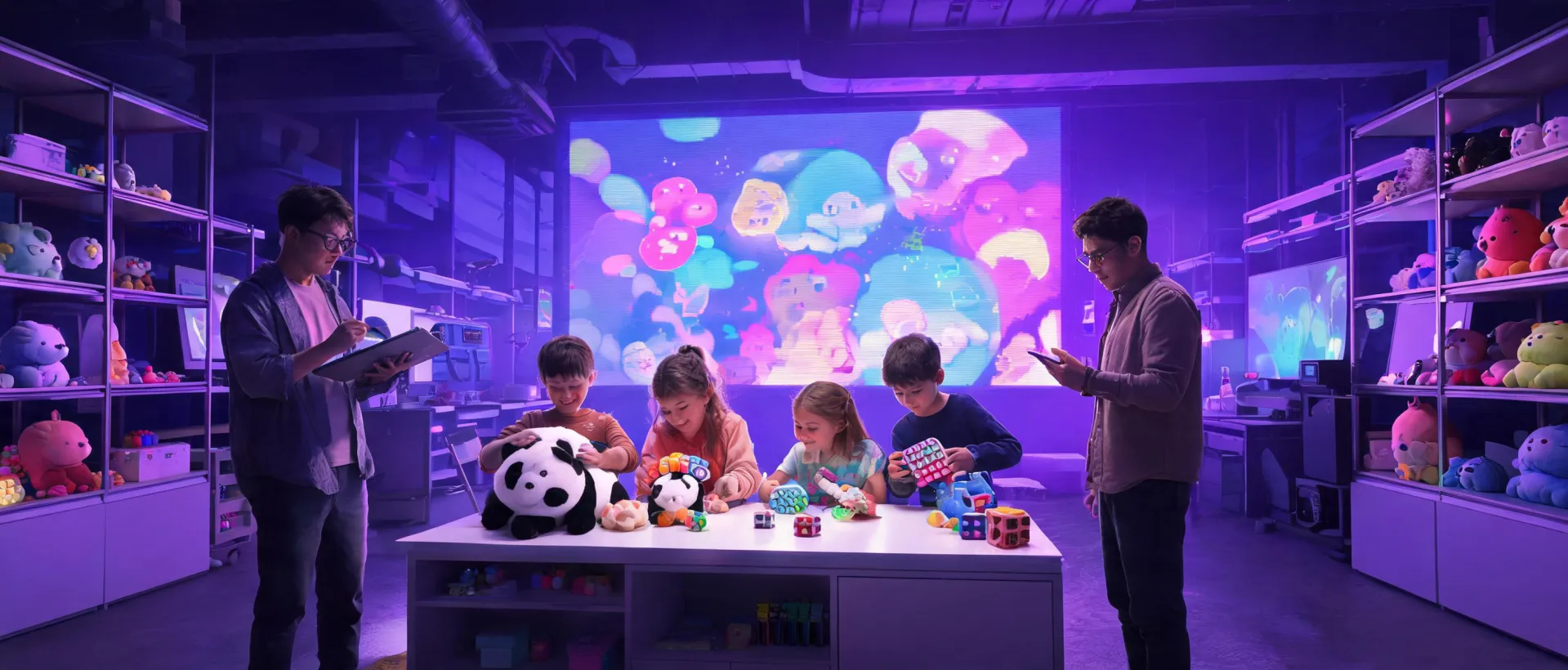
About the play studio
Osmo Builds Tactile Toys With a Digital-Learning Mindset
We believe a child should be able to squeeze, stretch, pop and compare a toy while still feeling that the play has a clever purpose.
We believe a child should be able to squeeze, stretch, pop and compare a toy while still feeling that the play has a clever purpose.
Osmo grew from the idea that interactive learning becomes stronger when children can touch the problem in front of them. In sensory toys, that idea becomes a practical design rule: a squishy should teach pressure, a slime kit should invite prediction, and a fidget toy should help a child notice rhythm, focus and reset.
Our innovation roadmap treats every new range as a play loop. First, the child takes an action. Next, the material responds in a visible way. Then the packaging, prompt card or activity guide helps the family name what happened. This is how a bright toy becomes more than a short burst of novelty.
The team formalized a tactile-first design method for children who understand ideas faster when the material responds under their hands.
Squishies, slime and fidget toys were organized as distinct sensory families instead of a single novelty aisle.
Osmo introduced short activity cues that help adults match the toy to the child without turning play into instruction.
Product cards, demo scripts and collection briefs were refined so buyers can compare play value quickly.
Assortment planners use Osmo briefs to give each tactile toy a specific role on the shelf.
Activity leaders translate squeeze, stretch and pop actions into simple observation routines.
Seasonal buyers build age-aware sensory kits that feel playful without becoming random.
Material teams compare rebound, stretch, scent-free handling and clean-up experience before launch.